
How to Remove Moss from Pavers
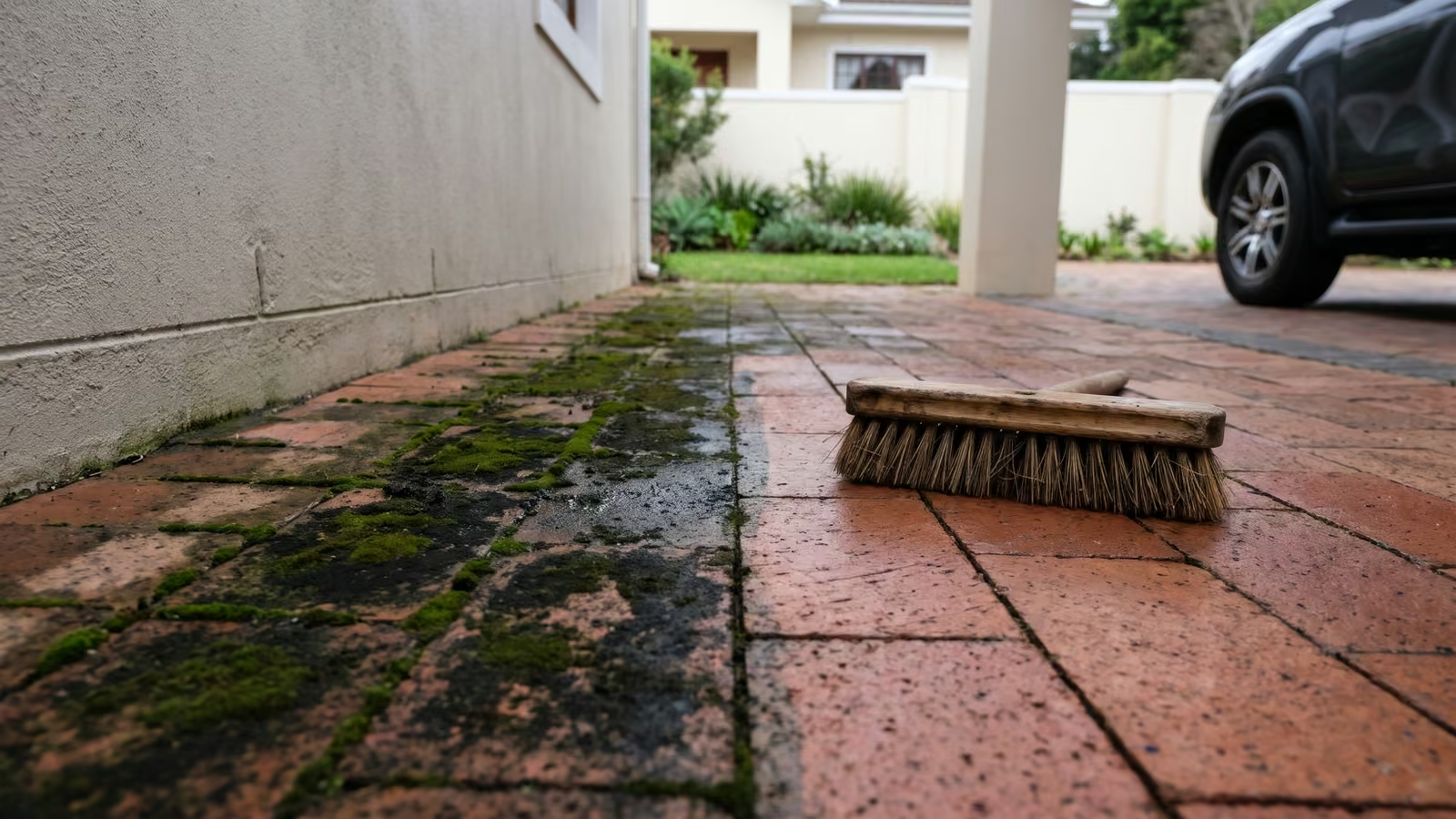
To remove moss from pavers, scrape and brush it off. Thomas Armstrong, a UK concrete block maker, says moss grows on the dirt and debris above the joint rather than in the paving, so it comes off easily, and that scraping and scrubbing is the most effective way to remove it. The RHS says to brush hard surfaces with a stiff broom or wire brush, and to use a pointed weeding tool for moss in the cracks. De Hoop Steenwerwe, a South African clay brick maker, calls moss an indication of poor drainage in a shaded area. The RHS says these growths do not damage what they grow on, but can make paths and steps slippery.
- Moss sits on top and scrapes off; lichen penetrates the block (Thomas Armstrong)
- Moss indicates poor drainage in a shaded area (De Hoop Steenwerwe)
- Moss killers take some days and work best in dry weather (De Hoop Steenwerwe)
Get a paving quote
Choose the job, the size and the area, and leave a number. Paving for Africa phones or WhatsApps you back.
Or call / WhatsApp 062 397 4233 · open WhatsApp
Moss, algae and lichen are not the same
| Growth | Description and source |
|---|---|
| Moss | Grows on the dirt above the joint, not in the paving, and comes off easily (Thomas Armstrong); a sign of poor drainage in a shaded area (De Hoop Steenwerwe) |
| Algae | No true roots, stems or leaves, just a thin layer on top; thrives in wet conditions, may grow faster in shade with poor air flow, and often builds up after wet winters (RHS) |
| Lichen | Grows into the block surface, so it is much harder to shift than moss or algae; it tends to form white or grey circular spots (Thomas Armstrong) |
The RHS says these growths do not damage what they grow on, but they can cause patios, drives, paths and steps to become slippery. On clay pavers, De Hoop Steenwerwe expects no such growth unless the paving is in heavy shade, under trees, or laid without an adequate fall.
How to remove moss from pavers, step by step
- On dry paving, use a stiff-bristled brush to remove dirt and build-up, then pull out and scrape off any weeds and moss (Thomas Armstrong).
- Brush the surface with a stiff broom or wire brush to remove established growths, and use a pointed weeding tool or an old knife for moss in the cracks between paving (RHS).
- Where cleaning has removed some jointing sand, Thomas Armstrong says to replace it by brushing in new sand once the paving has dried out.
- Keep brushing. The RHS says regular brushing helps stop new growth taking hold.
Moss killers and bleach: what the makers say
The RHS says that, as non-chemical methods are effective, there is no need to use moss killers or chemical patio cleaners. It notes that, where gardeners struggle with cultural methods, products for home gardeners are available for legal use, and that most of them are non-persistent, so repeat applications will be required.
- De Hoop Steenwerwe recommends a diluted chlorine bleach solution for moss and organic growth on its clay pavers, with a stronger mix only in severe cases.
- De Hoop says these moss killers need some days to work, and work best when put down in a dry spell.
- Thomas Armstrong warns that some moss-killing chemicals can discolour paving, especially if they contain ferrous sulphate, and says to test on an inconspicuous area first.
- For lichen, Thomas Armstrong uses a proprietary fungicidal solution, then a stiff-bristled brush, and warns that vigorous scrubbing can scratch the block surface.
- The CMHA paving guideline says to take care in selecting cleaning products, as acidic ones may harm vegetation and grass.
De Hoop says a proprietary moss killer should be used in accordance with the manufacturer's instructions, with any thick growths scraped off first. Test it on a hidden corner of your own paving first, as Thomas Armstrong and De Hoop both advise for cleaners.
Why moss grows: shade, damp and a poor fall
De Hoop Steenwerwe's preferred fix is a drier area, through better drainage or a raised level, though it notes these may not be practical. Its list of conditions for growth on clay pavers is heavy shade, trees overhead, or paving not laid to an adequate fall.
For concrete block paving, the CMA's Book 2 says a minimum fall of 2% in any direction is generally required. The RHS says to ensure surfaces slope slightly, and to prune overhanging plants to reduce shading and improve air flow, so that the drying effects of sun and wind reach the area. Kärcher's South African guide says removing coarse dirt regularly helps prevent moss, weeds and lichens, which grow especially in shady and damp places.
The RHS warns that if the growing conditions stay the same, the algae, lichens, liverworts and mosses come back.
Getting help with paving cleaning
For paving cleaning in Cape Town, the mean of three Cape Town cleaners' published prices is about R45 per m². Paving for Africa cleans and seals paving. Weeds in the joints and oil marks are covered in the guides on weeds between pavers and on oil stains on paving.
Moss and algae questions
How do I remove moss growing between bricks?
Scrape it out. The RHS uses a pointed weeding tool or an old knife to remove mosses from the cracks between paving. Thomas Armstrong says moss grows on the dirt above the joint and comes off easily with scraping and scrubbing.
What will help keep moss and lichen down?
Changing the conditions. The RHS advises pruning overhanging plants to reduce shade and improve air flow, and making sure surfaces slope slightly. It says growths will return if the growing conditions remain unchanged. For concrete block paving, the CMA says a minimum fall of 2% is generally required.
Why is my patio going green?
Often algae. The RHS says algae thrive in wet conditions, may grow faster in shade with poor air flow, and often build up after wet winters.
Is it OK for moss to grow between pavers?
Yes, mostly. It is not necessarily a problem, says the RHS, since these growths do not damage the surfaces they grow on. It says they can make hard surfaces slippery, so their growth is best prevented or managed on surfaces that are walked on.
How do you clean block paving without a pressure washer?
With a stiff brush. Thomas Armstrong brushes dry paving with a stiff-bristled brush, pulls out and scrapes off weeds and moss, then scrubs with a non-acid based detergent and a stiff yard brush. It says a pressure washer should not be required unless the paving is heavily stained or soiled.