
Garden Paving Ideas: Paver Patios, Paths and Edging
Garden paving ideas work when the paving matches how the space is used. SmartStone points patios to large, flat pavers, because it says cobblestones may leave tables and chairs unsteady. Its garden guide says lines don't have to be straight, and that curves can create a sense of flow. For concrete block paving, the CMA says a minimum fall of 2% in any direction is generally required.
- Large, flat pavers for patios (SmartStone)
- Concrete block paving: minimum fall of 2% generally required (CMA)
- Cement-stabilised bedding on paths of 1:15 or steeper (Clay Brick Association)
Get a paving quote
Choose the job, the size and the area, and leave a number. Paving for Africa phones or WhatsApps you back.
Or call / WhatsApp 062 397 4233 · open WhatsApp
Paver garden ideas for patios
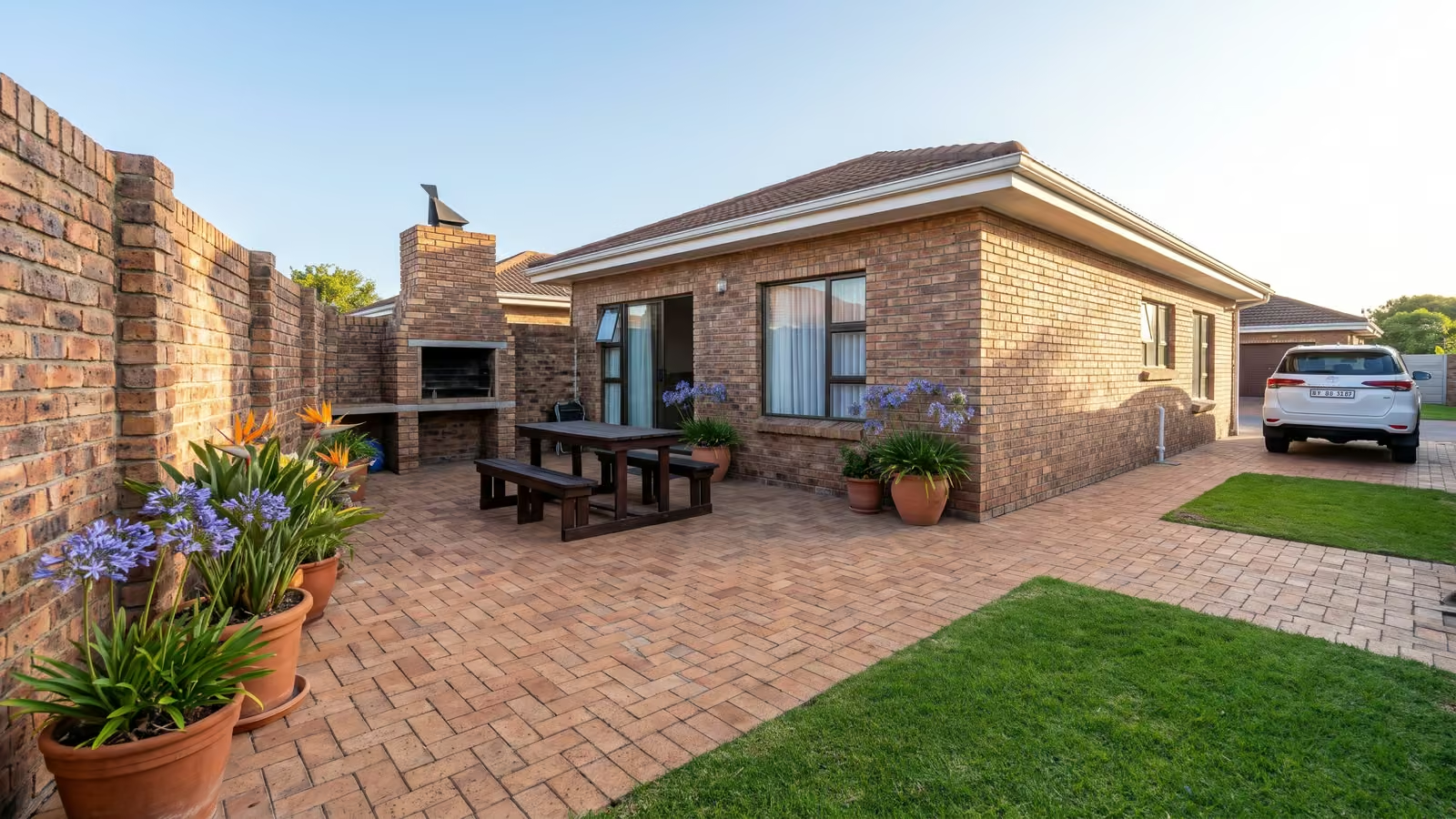
A patio carries chairs and a table, and SmartStone's installation advice points patios to large, flat pavers for that reason. Its concern is cobblestones, which it says may cause unsteady tables and chairs.
Pavers and tiles are different builds. Revelstone says its tiles of 15 to 25 mm need a concrete base to be glued to, while its pavers of 40 to 55 mm can be laid directly onto a well-prepared compacted sub-base.
For a small space, SmartStone's garden guide suggests cool colours like greys and charcoal for small gardens or patios, to visually open the area.
Sealing a patio. The CMA's homeowner guide lists surface sealants as not recommended, citing high initial cost, abrasion and regular maintenance. Revelstone says sealing its products is optional, and that sealing slightly darkens the surface and may impact slip-resistance. SmartStone recommends waiting six months before sealing paving.
Paths and steps through the garden
For a curved path, Bosun's pool paving guide notes that smaller concrete pavers work better around curves. SmartStone's garden guide says curves can help guide people around a garden.
On sloping paths, the Clay Brick Association calls cement-stabilised bedding sand a practical way to build any stretch at 1:15 or steeper. The CMA's homeowner guide stabilises the jointing sand only on slopes steeper than 1 in 20, around downpipes and along roof overhangs with no gutters.
Edges are needed even where nobody drives. The CMA's homeowner guide says kerbs are always required, even in a no-traffic situation, and that no kerbing is required where walls act as edge restraints.
Edging between paving, lawn and beds
An edge restraint keeps the bedding sand in and stops the outer pavers creeping outwards, as the CMA's Book 3 puts it. Bosun advises against making an edge restraint by digging a trench beside the paving after it is laid and filling it with concrete.
The CMA's homeowner guide sets its kerb units on a 7 to 10 cm layer of concrete or dagha on the outer edge. Its Book 3 holds the gap against the edge restraint to the same 2 to 6 mm tolerance as the joints.
Paving next to garden beds
Next to beds, the joint sand matters. The Clay Brick Association rules out jointing sand with clay in it that is likely to stain the paver surface.
Plastic sheeting under the paving does not help. SmartStone does not recommend plastic sheeting beneath paving. The CMA's homeowner guide says plastic under the bedding sand badly affects interlock and does not stop weeds from growing.
The CMA says about ninety per cent of plant growth in large paved areas comes from wind-blown seeds germinating in the jointing sand.
Keeping a garden patio tidy
- Bosun recommends replenishing the jointing material a month after installation and twice a year after that, until the joints are stabilised.
- The Clay Brick Association says joints can lose sand while the paving is new, and should be topped up where that happens.
- Revelstone says acidic cleaning of its products should only be done in extreme cases and limited to 2 to 3 times over the product's lifetime.
- SmartStone says it does not recommend washing SmartStone with acid, or with chemicals which contain acid.
- SmartStone traces picture framing on concrete-bedded flagstones to joints filled with a wet cement slurry grout.
Paving for Africa is one of the paving contractors in Cape Town and installs brick and cement paving. Pool surrounds raise their own questions, and the pool paving ideas guide covers copings, grip and salt chlorinators.
Garden paving questions
Do I need to seal my patio or paved area?
No, not always. Revelstone says sealing its products is optional but recommended for undercover or high-traffic areas, and that sealing may impact slip-resistance. The CMA's homeowner guide does not recommend surface sealants on concrete block paving. SmartStone recommends waiting six months before sealing.
How should I clean my patio?
Follow the cleaning instructions of the maker of your pavers, because they differ. Revelstone says acidic cleaning should only be done in extreme cases, 2 to 3 times over the product's lifetime. SmartStone does not recommend acid, or chemicals which contain acid, on SmartStone.
Why do my pavers have dark patches after they're laid?
For its own products, Revelstone blames differential weathering: parts of the paving surface cured at different rates. It says efflorescence generally makes the effect worse, and that removing the efflorescence lessens the dark patches.
Any way to stop weeds between these pavers?
The CMA traces most of them to the joints: it says about ninety per cent of plant growth in large paved areas comes from wind-blown seeds germinating in the jointing sand. It advises against plastic sheeting under the paving as a weed barrier.